Swiss immigrant Louis Michel traveled along the west bank of the Potomac River searching for land for a Swiss colony. He reported that Indians covered the area.

Peter Stephens, a trader from Germany, settles on the “point” of present day Harpers Ferry, gaining “squatters rights” to the property. The property is nicknamed “the hole” and “Peter’s hole” due to the low elevation of the area, which is only 247 feet above sea level. Stephens builds a log cabin home. Other pioneers begin to arrive and settle in the surrounding areas as well.

Thomas Mayburry constructs the first Iron Furnace west of the Blue Ridge Mountains on William Vestal's plantation. The furnace is referred to as Vestal's Bloomery. An interesting discussion on ironworks in Jefferson County, including Vestal's Bloomery, can be read online here. The original contract between Mayburry and Vestal has been transcribed here.

Harper, a Quaker colonist who was both a builder and a millwright, secures a patent for 125 acres in "The Hole" at the mouth of the Shenandoah River (present day Harpers Ferry), purchasing Peter Stephen's squatters rights.
Harper was on his way to construct a meeting house for fellow Quakers near present day Winchester when he first traveled through "The Hole", and was attracted to the area because of its ample water supply and strategic location. You can view the original land grant online here.

Established by settler Robert Harper, Harper's Ferry begins boating passengers back and forth across the Shenandoah River, making his town a starting point for settlers traveling westward. Not much information has been uncovered about ferrys used during this time period, however a model of what they probably looked like has been built and is on display at the The Prizery in South Boston, Virginia.

The town of "Shenandoah Falls at Mr. Harper's Ferry" is incorporated by the Virginia General Assembly.

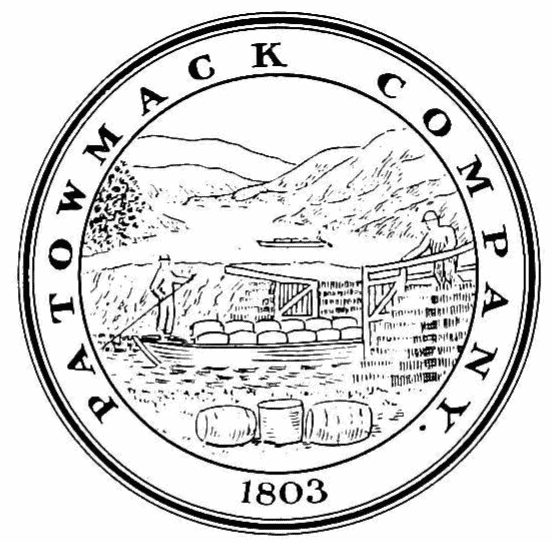
George Washington, under his company the Patomack Company, submitted another proposal for a series of canals and locks along the Potomac River between Georgetown and Harpers Ferry. His proposal gained the support of both Maryland and Virginia.

George Washington appointed James Rumsey the superintendent of fieldwork in the Patomack Company. However, Rumsey quickly resigned after one year, in part due to the problems plaguing the company and quarrels between management.
In 1796, the U.S. Government purchased a 176 acre parcel of land from the heirs of Robert Harper.

While sources vary on when construction actually began for the U.S. Armory at Harpers Ferry, construction began sometime between the years of 1797 and 1799, with 1798 being the most likely year for the ground breaking.

The first guns produced from the Harpers Ferry Armory were manufactured and assembled in 1799. The armory produced ammunition and spare firearm parts, as well as manufactured muskets, rifles, and pistols.

Work was completed on the Patomack Company canals in 1802, and the canals were opened for business.
We use this timeline to help us understand the events that may have affected or shaped a person's life. Here are some ideas as to how this timeline may help your further your own research: