Thomas Mayburry constructs the first Iron Furnace west of the Blue Ridge Mountains on William Vestal's plantation. The furnace is referred to as Vestal's Bloomery. An interesting discussion on ironworks in Jefferson County, including Vestal's Bloomery, can be read online here. The original contract between Mayburry and Vestal has been transcribed here.
The meeting of the first Lodge of Free Masons to be assembled west of the Blue Ridge Mountains was held in a large limestone cave two miles south of Charles Town, and presided over by 22 year old George Washington. The cave probably became a permanent meeting place, as it was deeded to Samuel Washington, George Washington's brother, some twenty years later. A researcher currently researching the cave has put his findings online.

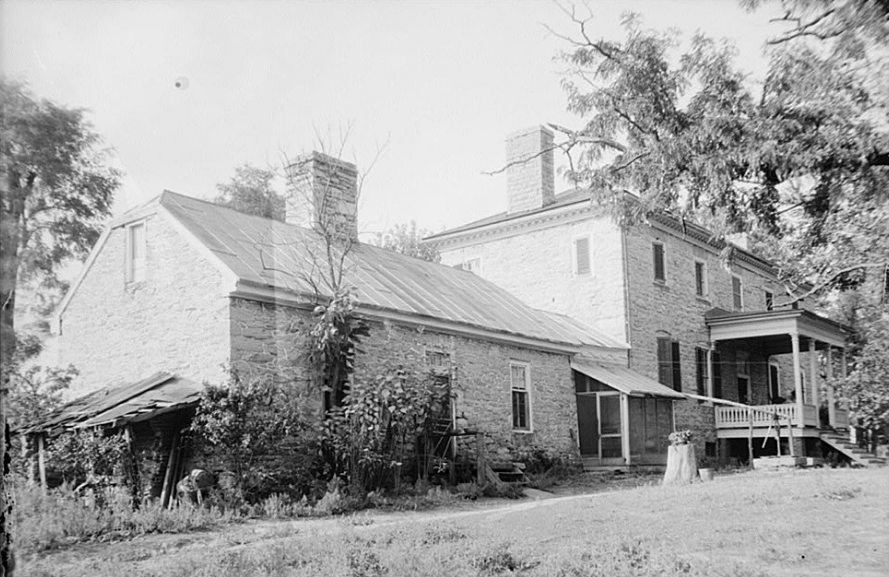
The home of Samuel Washington, designed by John Ariss, was constructed in the vicinity of Charles Town. Samuel Washington was George Washington's brother.
Harewood is part of the National Register of Historic Places

The Virginia General Assembly charters Charles Town, a town built upon 80 acres owned by Charles Washington.

James Madison and Dolley Payne Todd were married at Harewood, which had been passed to George Steptoe Washington, Samuel Washington's son. Samuel was the original owner of the home and a brother to George Washington. George Steptoe was married to Dolley's sister, Lucy.
The Madison and Payne/Todd wedding took place in the Harewood Drawing Room, which today remains significantly untouched since the time period. Learn more about Dolley.
A school for young men, The Charles Town Academy, was incorporated. The academy prepared young men to enter institutions of higher learning.

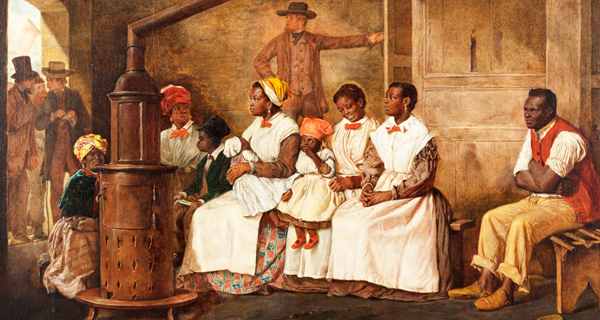
To protect from losses due to runaway slaves, the Virginia Slave Insurance Company was created and incorporated in Charles Town.

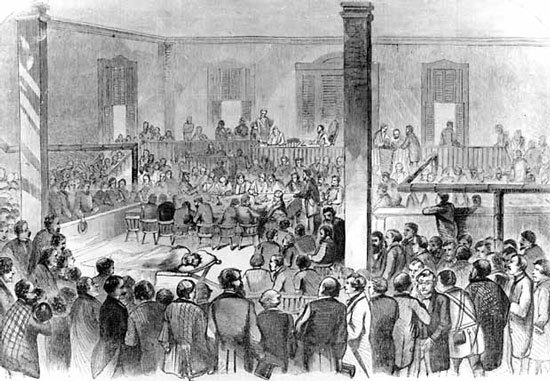
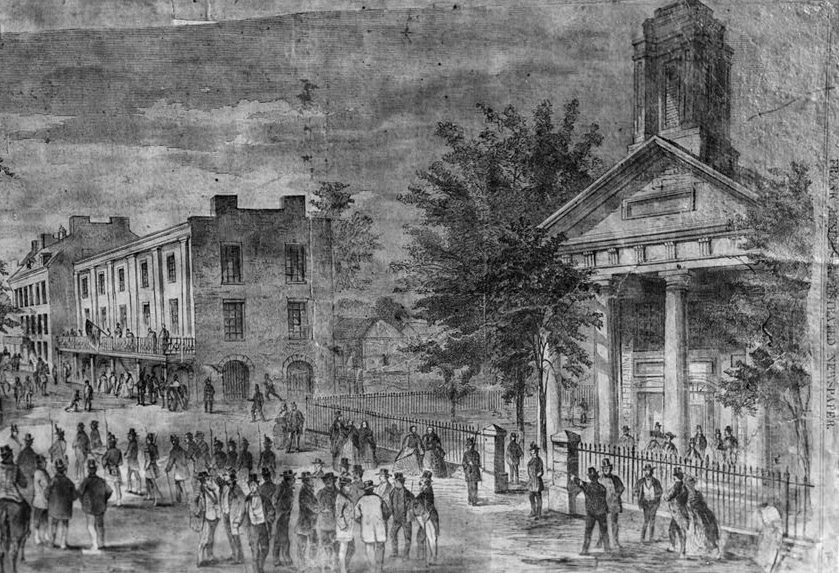
Because of growing pains, a larger, new courthouse was built atop the land where the old courthouse stood -- the same courthouse which stands today. During this time, the bottom floor was a large courtroom in its entirety.

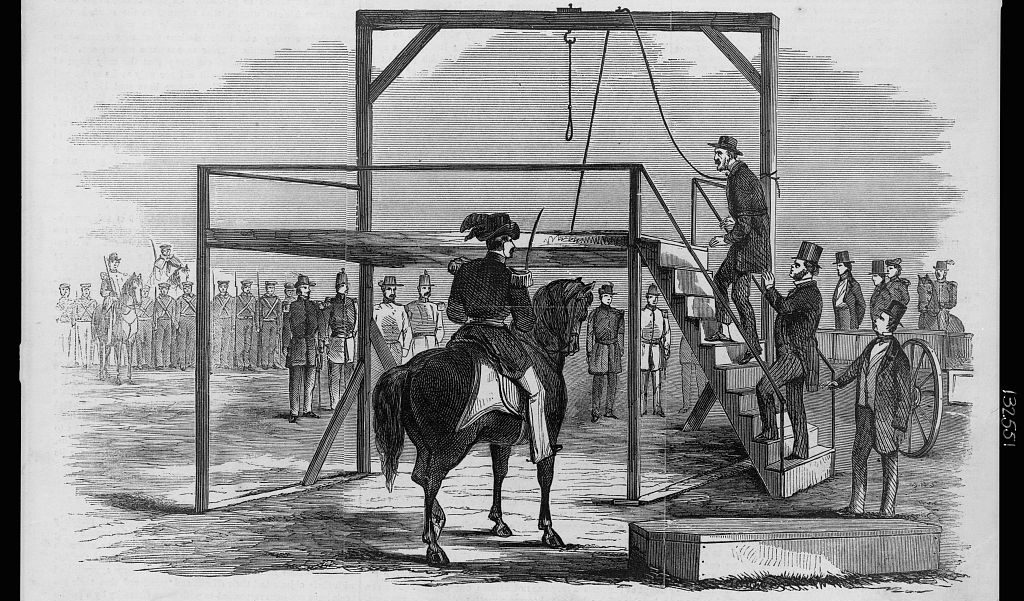
John Brown was driven to his execution site in a wagon seated atop his casket. The execution site was a field which was located along present day Samuel Street in Charles Town. Once he had arrived, Brown was surrounded by an extremely strong military presence, troops and Corps of Cadets from the Virginia Military Institute (VMI), in order to ward off another uprising by Brown's men. Francis Smith, superintendent of VMI, was put in charge of the actual execution on orders from the Governor of Virginia. Brown continued to have a pulse for 35 minutes after he was hung.
Interestingly enough, Major Thomas Jackson was in command of the artillery from VMI at the execution of John Brown. In only a short period of time, Major Jackson would achieve the nickname "Stonewall" and become famous throughout history.

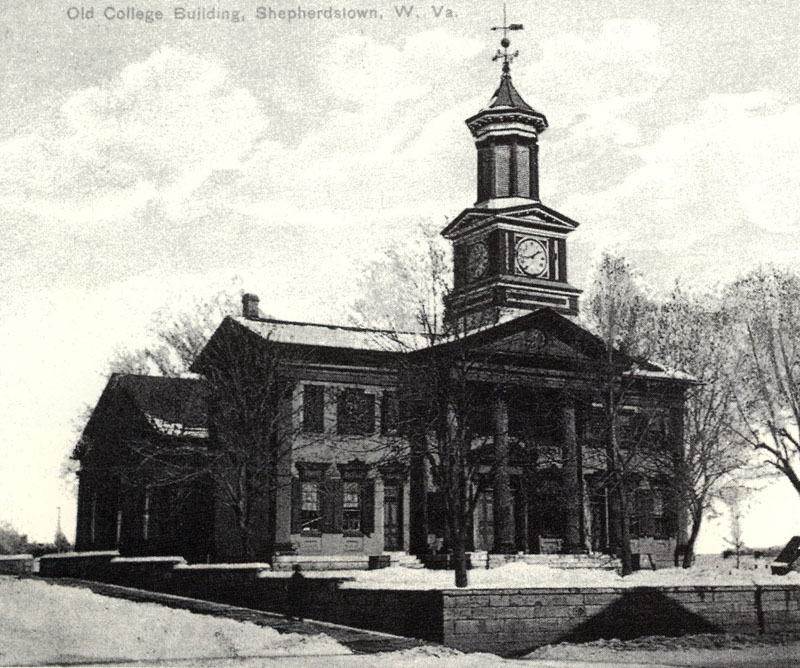
In February of 1865, the courthouse was transferred from Charles Town to Shepherdstown. The courthouse at Shepherdstown was housed in the building which is now McMurran Hall at Shepherd University. The building was originally built by Rezin Shepherd for use as a town hall and was used as a hospital during the civil war Battle of Antietam. Additions were added on either side of the main portion of the building to create offices of the courts.
We use this timeline to help us understand the events that may have affected or shaped a person's life. Here are some ideas as to how this timeline may help your further your own research: