In the early 1830's, William Flanagan moved his small family from York County, Pennsylvania to the Harpers Ferry, [West] Virginia area. But which route did they follow to arrive in Jefferson County?
Sometime around 1830, at about 43 years old, William Flanagan, his wife, and his 21 year old son, James, made the trek from York County, Pennsylvania to Jefferson County, then Virginia.
With the canal still under construction, and with railroad service to Harpers Ferry still a few short years away, William's family likely took the trip by Conestoga Wagon. In the Borough of York, Conestoga Wagons were readily available due to the sheer volume of travelers who traveled through the area.
The Great Wagon Road
Of course, there is always more than one way to get from one point to another. However, the most likely route was a heavily traveled, well-known, American highway: The Great Wagon Road.
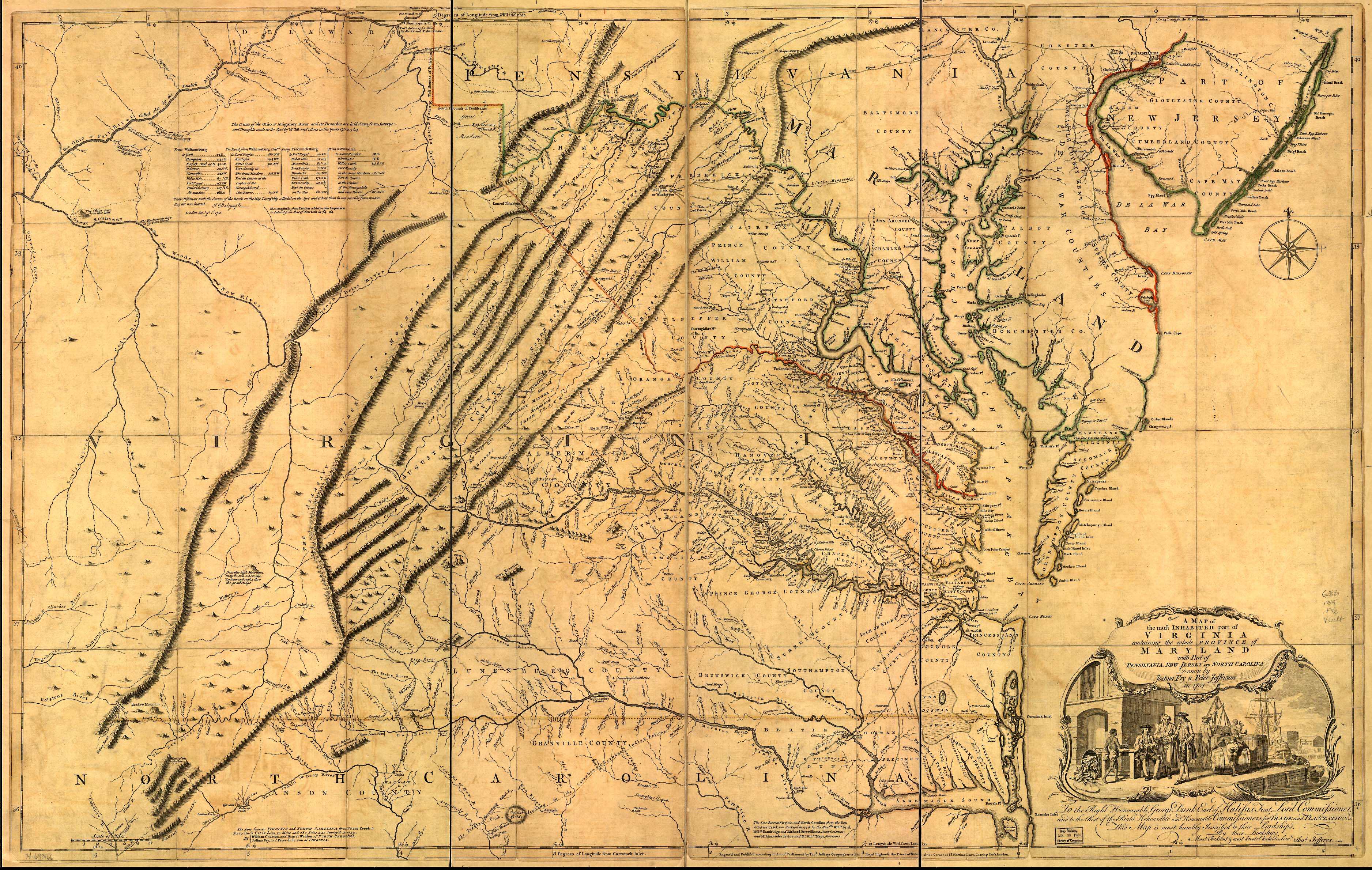
Established sometime around the year 1754, The Great Wagon Road was a well kept trail which ran through the Appalachian Valley all the way to Georgia. This trail was the primary route of settlement for the Southern states, and was a major route of the German Palatines and the Scotch-Irish.
Being of Presbyterian faith, William Flanagan was likely an Ulster-Scot (or Scotch-Irish) himself, making it rather fitting that he and his family follow such a route.
To the right, the map shows the original path of The Great Wagon Road. Click on the map for a larger view.
| Route | Distance |
|---|---|
| York Road (PA-115) | 13.5 miles |
| Hanover, PA (PA-194) | 10 miles |
| Carroll County, MD (MD-194) | 10 miles |
| Big Pipe Creek | 4 miles |
| Mumma Ford | 21 miles |
| Frederick, MD | 23.5 miles |
| about 82 miles |
Monocacy Road
William and his family wouldn't have followed this road for long, however. They likely would have continued on an even older route: Monocacy Road.
Established sometime around 1730, Monocacy Road began right outside of York. The Flanagan clan likely would have taken the Susquehanna & York County Turnpike, chartered in 1804, to meet the original Monocacy Road.
This route would have taken them down present day York Road (PA-115) for about 13.5 miles, until the family reached Hanover, Pennsylvania. From there, the road followed the route of PA-194, through Littlestown, to the Maryland State Line in Carroll County, which was only about 10 miles. From there, the family would have traveled through Taneystown, MD into Big Pipe Creek, another 10 miles. From here, they would have continued about 4 miles to cross the Monocacy River at Mumma Ford.
The next area of interest for the family was Frederick, Maryland, at Fort Detrick, after a journey of about 21 miles from Mumma Ford. From here, the family would have traveled down the present day path of US-340 into Harpers Ferry.
The Flanagan clan was not known to have ever settled in Harpers Ferry. Instead, they traveled further and settled for a short period in present day Bardane. Later, they moved to the outskirts of Harpers Ferry. The exact area of their second settlement in Jefferson County is unknown. Unionville (Uvilla), Potomac View near Pack Horse Ford, and, of course, their Oak Grove (Bakerton), residence are all mentioned in various records.
In order to determine their exact movements in Jefferson County, deeds will need to be studied further.